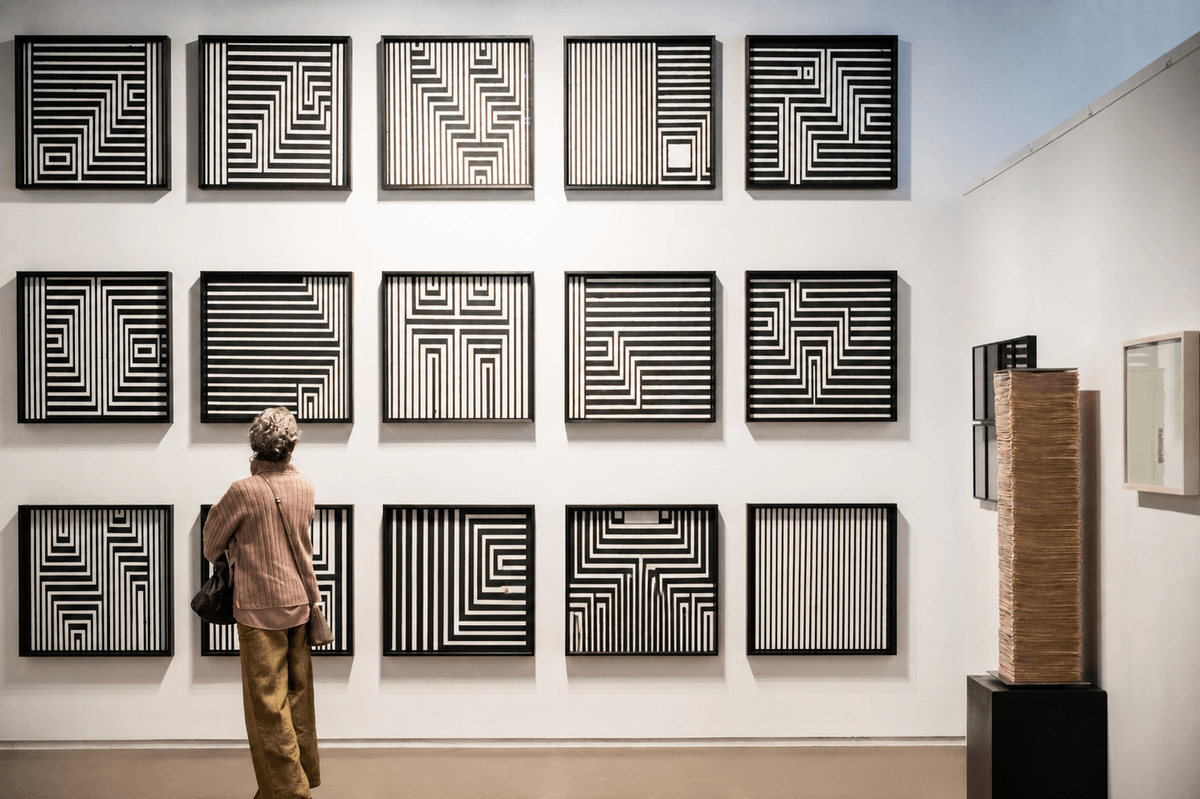
As part of our partnership with ArtOnPaper, we had the pleasure of speaking with Emmanuelle Indekeu, General and Artistic Director of the Brussels fair dedicated to drawing and works on paper. At the helm of ArtOnPaper since 2026, Emmanuelle champions an open and contemporary approach to art, shaped by a career spanning emerging artists, institutions and cultural engagement.
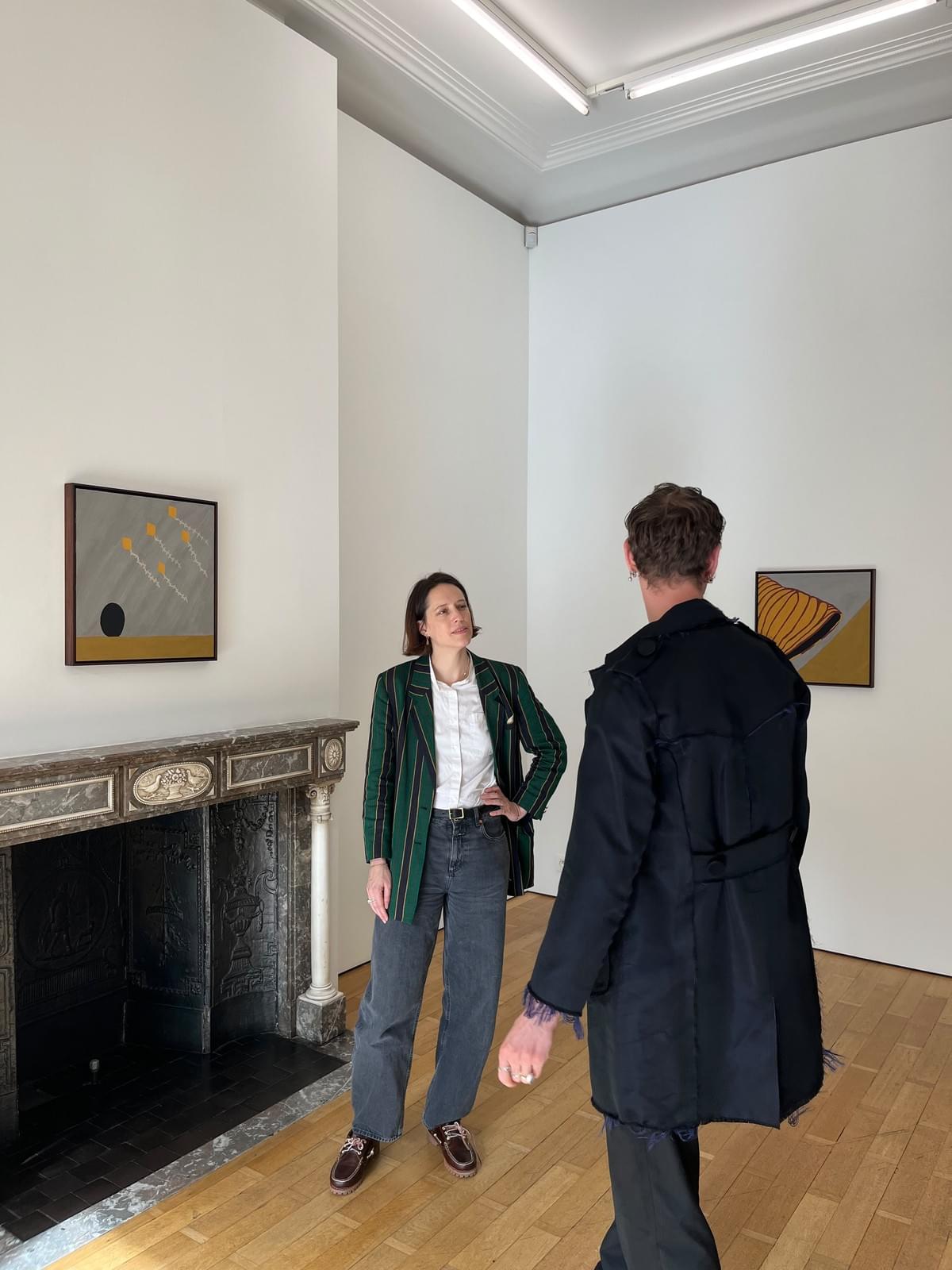
1. The market for drawings and works on paper has long been seen as a more accessible entry point for collectors. Do you see editions as a growth opportunity for exhibiting galleries? A way to reach new collectors at lower price points?
I think the question of editions is particularly interesting for several reasons. First, editions are indeed more financially accessible, but they also provide access to works by more established artists whose unique pieces are out of reach for the majority of collectors. However, I would be wary of reducing editions to a simple entry point: it is a category with its own set of requirements, from the condition of the sheet and the quality of the print to its relationship with the original work. Artists also allow themselves different kinds of experimentation in their editions. Editions therefore also attract experienced collectors looking to deepen their understanding of an artist’s body of work rather than simply expand their collection. The latest Art Basel & UBS report confirms this trend at sector level: prints and multiples now account for 12% of gallery sales, while photography has doubled its share over the past few years. At ArtOnPaper, Editions is a section in its own right, which we want to develop because it has its own curatorial legitimacy, on a par with Main or Solo.
2. Being a single-category fair is both a strong point of identity and a potential niche. Where do you draw the line between curatorial rigour and the need to broaden the audience?
I think the tension you describe is based on a misunderstanding, because it assumes that accessibility and high standards are mutually exclusive. Paper is actually the medium that is closest to both the seasoned collector and the amateur or curious visitor: it is intellectually easy to approach, since everyone has handled it from early childhood. There is therefore none of the sense of intimidation that can arise with a medium that is unfamiliar or impressive because of its technique or scale. But this almost naïve first encounter conceals a much denser reality: paper has its own sensuality, demands a high level of craftsmanship, and carries centuries of history and expertise, from medieval vellum to contemporary printmaking. It is precisely this gap between the familiarity of the gesture and the depth of the medium that means we do not have to choose between rigour and openness: the entry point is universal, but it leads nowhere without genuine curatorial work and a certain level of ambition. The five sections we are developing — Main, Emergent, Solo, Old Masters and Editions — give form to this depth by attempting to bring together centuries of artistic practices, without having to lower our standards in order to broaden the audience. In a sense, the audience is already there, in its instinctive relationship with the medium.

3. We are seeing a contraction in the middle of the market, with buyers increasingly concentrating on “safe bets.” Is the market for works on paper following the same trend, or does it have its own dynamic?
According to the latest reports, the market is hollowing out in the middle rather than declining as a whole: 11% of artists account for 58% of gallery sales, and the segment between $500,000 and $1 million is the one causing the most concern among dealers, with confidence falling from 51% to 34%.
ArtOnPaper does not sit at a single point on this curve, because the fair brings together three distinct purchasing dynamics. Below €10,000, purchases are often driven by a genuine coup de cœur — a buying decision that largely escapes this question of caution, as it responds to desire rather than calculation. Between €10,000 and €50,000, a majority of galleries present emerging artists or smaller works on paper by established artists. This is the segment that the report identifies as the most resilient in terms of volume, where caution does not necessarily translate into a retreat towards established names, but rather into trust in the judgement of a gallery that has supported an artist for several years. Some of our galleries also present works from the secondary market, by historical artists already established in collections and art-historical literature — a segment closer to the logic described in the report, where “safe bets” are more closely associated with established reputation and market value. Rather than reflecting a contraction of the middle market, ArtOnPaper therefore brings together three different economies of desire and risk, without one necessarily weakening the others, since they appeal to different buyers and motivations.
4. More and more galleries are generating a significant share of their revenue through online platforms. How do you integrate this digital dimension into your thinking about the fair? Where do you see genuine complementarity?
The 2026 figures point more towards a return to the physical world than a flight towards digital: online sales have fallen to $9.2 billion, their lowest level since 2019, far below the 25% market share reached during the pandemic. At the same time, gallery sales at fairs have risen slightly, from 31% to 35%. This reinforces my feeling that digital platforms excel at discovery — 63% of the value of online sales comes from purchases below $50,000 — but they cannot replace the experience of examining a work, the sheet, its grain, its watermark, its reverse. At ArtOnPaper, complementarity is built upstream through several channels: Instagram and the newsletter help tell the story, while Artflo presents a selection of works from each gallery and allows collectors to identify works before they even arrive at the fair. This phase prepares the visit; it does not replace it. The acquisition itself, and the trust that precedes it, continue to take place physically, at the fair.
5. The latest Art Basel & UBS report points to a strengthening of regional buying. Could this trend benefit a market like Belgium: smaller, but potentially more identifiable than larger and more dispersed hubs such as Paris or London?
The report documents a tangible regionalisation of flows: in the UK, art imports rose by 47% while exports fell by 39%. In continental Europe, France was up 9%, while Switzerland and Austria rose by 13%. Belgium does not appear separately in these statistics, so I would remain cautious about the figures, but the underlying principle works in our favour: a smaller market can offer a level of clarity that larger hubs, with their geographical spread and sheer volume, no longer necessarily provide. ArtOnPaper can be experienced in its entirety in an afternoon and understood as a coherent whole. That is an advantage at a time when collectors are perhaps less interested in covering an entire market than in finding their way around it.
6. What would you say is ArtOnPaper’s editorial DNA today? What defines an ArtOnPaper selection and distinguishes it from another editions-focused fair?
The direction we are taking for this edition is first and foremost rooted in the fair’s own history: the solo presentation, with which it all began, remains at the heart of the project, with 13 of our 56 exhibitors presenting a solo show this year. At the same time, this direction is combined with a focus on new generations, both among exhibitors and collectors: 17 of our galleries have been in existence for less than five years, and we are seeing distinct patterns of collecting among younger collectors. Finally, there is the dialogue with modern and Old Master art, which we are continuing to develop. The Old Masters and Editions sections are still taking shape, and we want to develop them further in the years to come. We want to anchor the fair in a historical discourse and create a dialogue between contemporary, modern and Old Master art, but this is a story that we are building together.
This tenth edition closes the first decade and opens a new one — we are only taking the first step, and there is still much to develop.